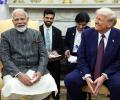
'India has very strong tariffs on certain imports from the US. Like in the automobile sector, India charges 100 per cent'
'But I don't think the government is in a great hurry to sign the BTA.'

India and the United States will finalize the contours, schedule of negotiations, and terms of reference for a proposed bilateral trade agreement (BTA) during a three-day meeting beginning Tuesday. The agreement is expected to be finalized in two tranches, with the first phase focusing on goods trade. The US team, led by Assistant US Trade Representative for South and Central Asia Brendan Lynch, will be in India from March 25-29 to discuss the agreement. Both countries are aiming to conclude the first phase of the agreement by fall 2025.
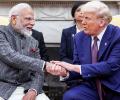
India has firmly rejected any involvement of a third party in its border dispute with China, declining an offer of mediation from US President Donald Trump. Foreign Secretary Vikram Misri emphasized India's commitment to resolving bilateral issues through direct dialogue, stating that New Delhi has always maintained a bilateral approach in dealing with such matters. This stance underscores India's position that the border dispute with China should be addressed through direct negotiations between the two countries.
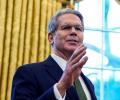
As in-person negotiations between India and the US kickstarted on Wednesday, Treasury Secretary Scott Bessent said he expected India to strike the first bilateral trade deal to avert President Donald Trump's reciprocal tariffs.
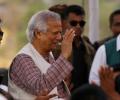
Bangladesh Chief Adviser Muhammad Yunus has said that his interim government wanted good relations with India, but 'something always went wrong'.

The Congress on Sunday demanded answers from the government on whether it has accepted third-party mediation on Kashmir after the United States made announcements on behalf of India and Pakistan, and slammed attempts to 'internationalise' the issue and 'hyphenate' the two countries.
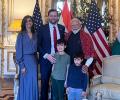
US Vice President JD Vance and his wife Usha, the first Indian-American Second Lady, are set to visit India early next week. Vance will hold talks with Prime Minister Narendra Modi during his visit. The visit comes amid global concerns over President Donald Trump's policy on tariffs. Vance's visit is likely to be more of a private trip though it will have official components.
A government official said India and the US are exploring an interim trade deal within 90 days.
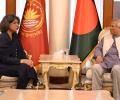
Bangladesh has demanded a public apology and compensation from Pakistan for the 1971 atrocities, raising "historically unresolved issues" during the first foreign secretary-level talks between the two countries in 15 years. Dhaka also asked Islamabad to pay USD 4.3 billion as its share from the combined assets at the time of East Pakistan's split from West Pakistan in 1971 to form an independent Bangladesh.

It will be for the first time in nearly nine years India's external affairs minister will travel to Pakistan even as the ties between the two neighbours remained frosty over the Kashmir issue and cross-border terrorism emanating from Pakistan.
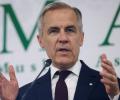
India is the fifth largest economy in the world and it is central to a number of critical global supply chains, Canadian Prime Minister Mark Carney has said, arguing that the leadership of the country must be part of discussions at the upcoming G7 summit.

India expects partners to understand its policy of 'zero tolerance' against terrorism, and it will never countenance 'perpetrators of evil' being put on par with its victims, External Affairs Minister S Jaishankar said on Saturday during extensive talks with his British counterpart David Lammy.
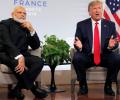
Modi said India and Pakistan were together before 1947 and he was confident that the two neighbours can discuss their problems and solve them.
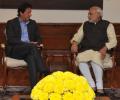
PM Modi telephoned Imran Khan to congratulate him on his party's victory in the general elections
From the 30-share blue-chip pack, Adani Ports dropped over 4 per cent. UltraTech Cement, Sun Pharma, IndusInd Bank, NTPC and Tata Steel were also the among the laggards. Nestle, ICICI Bank, Infosys, Tata Consultancy Services and HCL Tech were among the gainers.
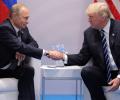
Trump has made clear his intention to mediate a resolution between the two nations, emphasising the need for a swift de-escalation of violence.

US President Donald Trump on Thursday claimed that India has offered to drop all tariffs on American goods. Speaking at a business roundtable in Doha, Trump also said he had a "little problem" with Tim Cook, and he told the Apple CEO that he does not want him to build iPhones in India.
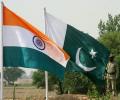
The comments by external affairs ministry spokesperson Arindam Bagchi came when asked at a media briefing about Sharif's offer last week to hold talks between the two countries to resolve outstanding issues such as Kashmir.

Artificial Intelligence, innovation and next-generation technologies figured prominently during the high-stakes discussion between Prime Minister Narendra Modi and US President Donald Trump at the White House, as the two sides announced transformative measures, including the US-India TRUST initiative, roadmap on accelerating AI infrastructure and INDUS Innovation, to boost tech ties.
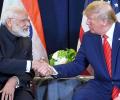
It would be the prime minister's first bilateral visit to the US after Trump became president for a second term.
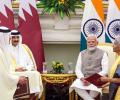
India and Qatar on Tuesday agreed to elevate their relationship to a strategic partnership and double bilateral trade to USD 28 billion over the next five years. Prime Minister Narendra Modi and Qatari Amir Sheikh Tamim Bin Hamad Al-Thani signed agreements and MoUs to strengthen economic cooperation, including a revised double taxation avoidance agreement. The strategic partnership will cover the "entire spectrum" of the bilateral relationship, including trade, energy security, and regional and international cooperation. Both leaders also discussed ways to further strengthen and broaden the energy partnership, including "exploring mutual investments." The Amir's visit provided an "excellent opportunity" for the top leadership of the two countries to discuss and "cement a strategic partnership for enhanced future cooperation."
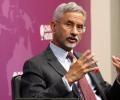
"From President Trump's perspective, the one big shared enterprise that we have is the Quad, which is an understanding where everybody pays their fair share. There are no free riders involved. So that's a good model which works," he said. The Quad alliance consists of the US, India, Australia and Japan.
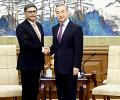
The Chinese Defence Ministry has stated that the Indian and Chinese militaries are implementing the resolutions to end the standoff in eastern Ladakh in a "compressive and effective manner." This follows the disengagement process completed late last year after a pact for troop withdrawal from Depsang and Demchok, the last two friction points in eastern Ladakh. The disengagement has paved the way for the resumption of various dialogue mechanisms between the two countries, with the aim of normalizing bilateral relations.
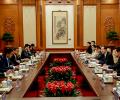
'We remain in touch with the Chinese side, in Beijing as well as in Delhi, to bring predictability in the supply chain.'

The relations between India and China cannot be normal if peace and tranquillity in border areas are disturbed, External Affairs Minister S Jaishankar said on Friday.
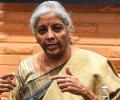
'The answer is not for me to give. The answer either way has to be heard from the industry itself. Tell us why not if you are not doing it; tell us if you are doing it -- why should this question remain unanswered?'

Jaishankar said that the Pahalgam attack "was an act of economic warfare. It was meant to destroy tourism in Kashmir, which was the mainstay of the economy. It was also meant to provoke religious violence because people were asked to identify their faith before they were killed."

'Hi friends, from #Melodi', this is how Italian Prime Minister Giorgia Meloni captioned a small selfie video showing her camaraderie with Prime Minister Narendra Modi.
The sources said Misri reiterated the government's stand that the decision to stop military actions was taken at a bilateral level, as some opposition members questioned US President Donald Trump's repeated assertions about his administration's role in stopping the conflict.
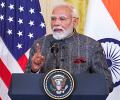
Those who stay in other countries illegally do not have any legal right to be there, Modi said.
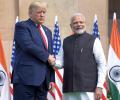
Prime Minister Narendra Modi and US President Joe Biden will have a substantive engagement on the sidelines of the Quad summit on Saturday, and the two sides will sign at least two agreements following the talks.
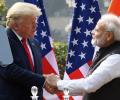
Prime Minister Narendra Modi and United States President Donald Trump on Monday vowed to work towards a 'trusted' partnership with a focus on boosting India-US cooperation in areas of trade, energy and defence in their first phone conversation since the American leader's inauguration last week.
With US President Donald Trump "temporarily suspending" country-specific reciprocal tariffs until July 9, India sees the three-month window as an opportunity to renew its push for a proposed bilateral trade agreement (BTA) with the US and expedite finalisation of the first tranche of the trade deal.
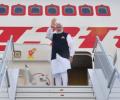
New initiatives to boost cooperation to ensure stability in the Indo-Pacific, ways to find peaceful solutions to the conflicts in Ukraine and Gaza and addressing concerns of the global South will be the focus of Prime Minister Narendra Modi's three-day visit to the US beginning Saturday.
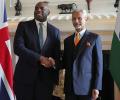
India's External Affairs Minister S Jaishankar has stated that the US administration under President Donald Trump is moving towards multipolarity, which aligns with India's interests. He also revealed that India and the US have reached an agreement on the need for a bilateral trade pact. Jaishankar touched upon various foreign policy issues including India's role in the Russia-Ukraine conflict, the trajectory of the BRICS grouping, and relations with China during a session at the Chatham House think-tank in London.
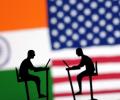
India and the US will sit together in the next couple of weeks to decide on the nature of the proposed trade agreement and finalise its broad contours, a senior official said on Monday. During the recent visit of Prime Minister Narendra Modi to Washington, India and the US announced to more than double the two-way commerce to $500 billion by 2030 and negotiate the first tranche of a mutually beneficial, multi-sector bilateral trade agreement (BTA) by fall of 2025.
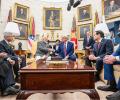
'The US has agreed to negotiate with us a mutually beneficial bilateral trade agreement, which will go for reduction of tariffs on both sides so that our trade can grow.'
Government representatives told a parliamentary panel that the US has not officially conveyed to India that it should cut tariffs by April 2.

'India has gone some way to meeting its objectives because it has established a deterrent value that Pakistan will have to take into account when it plans future terrorist attacks.'
